

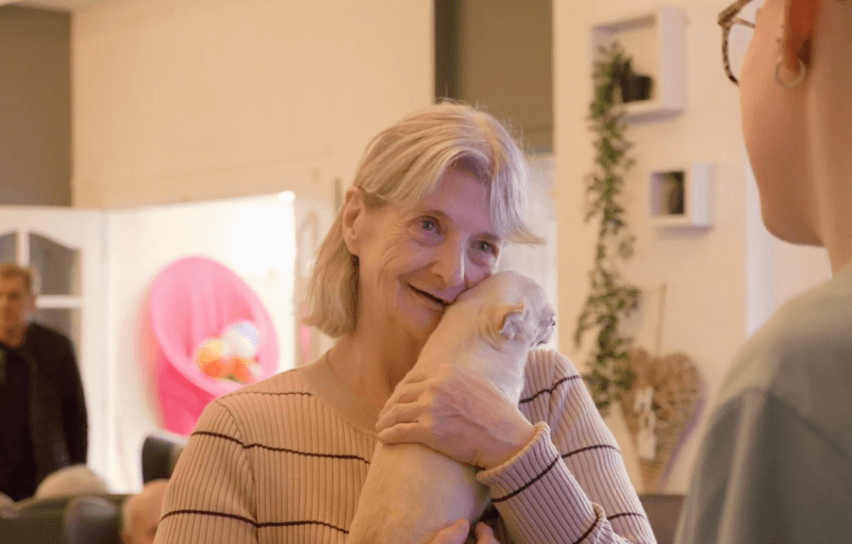
A friendly dog resting its head on a resident's knee can do something that conversation sometimes cannot. Animal and pet therapy, where trained or well-suited animals spend time with residents, is increasingly used in care homes to ease loneliness, lift mood, calm agitation and encourage gentle movement. This guide explains the main benefits, what the research does and does not show, and how animal visits are kept safe.
The main benefits of animal and pet therapy
- Less loneliness and more connection. Animals give people something to talk about and something to share. A resident who is quiet in a group may open up when a dog or cat is in the room, and the visit gives residents and families an easy shared activity.
- Calmer behaviour in people living with dementia. A 2023 systematic review in the journal Dementia pooled the results of a small number of randomised trials and found animal-assisted interventions were effective for agitation. It also found promising signs for depression and quality of life.
- Meaningful activity. Stroking, brushing, feeding or simply talking to an animal gives a resident a role and a sense of purpose, which is especially valuable when other activities become harder.
- Gentle movement. Reaching to stroke an animal, walking alongside a dog or throwing a toy encourages residents to stay active in a way that feels like fun rather than exercise.
- Comfort and calm. One study of nursing home residents found that time with a therapy dog was linked to lower blood pressure and heart rate.
- Memory and reminiscence. Animals often bring back memories of pets from earlier life. A resident who rarely speaks may suddenly start telling you about the dog they had as a child, which opens the door to conversation and connects staff to their life story.
What the research does and does not show
The evidence is encouraging, but it is not yet conclusive. A systematic review of eight randomised controlled trials in BJPsych Open found variable results, with some improvement in depression, agitation and behaviour. Studies differ in size and method, and more long-term research is needed on how often and for how long sessions work best.
Researchers also point to practical limits, including animal welfare, the risk of adverse events and the cost of running a programme. For that reason, a good programme is planned carefully rather than added as an extra.
Types of animal therapy in a care home
- Visiting therapy dogs and cats. The national charity Pets As Therapy arranges visits to care homes by volunteers with their own temperament-assessed dogs and cats.
- Small animals. Rabbits and guinea pigs can be held and stroked by residents in a calm setting.
- Birds and fish. An aviary or fish tank gives residents something calming to watch, even when they cannot interact directly.
- Robotic pets. For residents who cannot be around live animals, soft robotic pets that respond to touch have shown promising results in dementia care.
Animal visits can also support residents recovering from a stroke, and our guide to life after a stroke explains what that recovery involves.
How animal visits are kept safe
Bringing animals into a care home works only when it is done properly. Good practice includes:
- Checking beforehand for residents who have allergies or are afraid of animals
- Using animals that are health-checked, vaccinated and temperament-assessed
- Making sure staff supervise every visit
- Keeping animals out of kitchens, clinical areas and anywhere food is prepared
- Cleaning hands after contact with an animal
- Giving the animal regular breaks, so it is never overworked
Participation is always the resident's choice. Some people simply do not like animals, and that is fine.
Bringing animal therapy into daily life
Animal visits work best as part of a varied programme of activities that keeps residents engaged. Our article on celebrating life, birthdays and holidays at Abafields shows the kind of shared moments that make a difference. For residents living with memory loss, dementia care that includes sensory and familiar experiences can make daily life calmer, and a memory box is a simple way to bring in photos of a much-loved pet.
Can my relative bring their own pet?
Families often ask this, and the answer differs from home to home because it depends on the animal, the resident's needs and the other residents. It is worth asking early. Our guide to moving to a care home covers what to prepare, and our list of 15 questions to ask when viewing a care home includes questions about activities and daily life. To understand how a move into care can support wellbeing more broadly, read about the benefits of residential care.
If you would like to know what activities and wellbeing support we offer at Abafields, get in touch with our team and we will talk it through with you.

Victor Phiri
Home Manager

